Ask the follow-up question
The first answer often tells us what someone believes. The next question helps us understand why.
About Christopher Balkaran
I created Open Minds to explore the public questions that shape how we live together.

My starting point
Difficult questions are here to stay, and we need to unpack their nuance if we want to have a healthier exchange of ideas.
A little bit about me
I became interested in what can get lost between the way an issue is described by an institution, the way it is debated in media and the way it is experienced in people’s lives.
A climate policy, for example, can be intended to reduce emissions while also raising questions about taxation, affordability, industry and who is being asked to carry the cost. A discussion about public safety can involve enforcement, prevention, accountability and public trust.
When some of those perspectives are missing, we are left with an incomplete picture. The public discussion becomes less informed and the policies that follow may not fully reflect the people, concerns and consequences involved.
That means listening to what people are actually saying, asking where their assumptions come from and being honest about what the evidence can and cannot tell us.
I’m interested in discovering what becomes visible when people feel heard, assumptions are made explicit and we are allowed to wrestle with a complicated issue for a little bit longer.
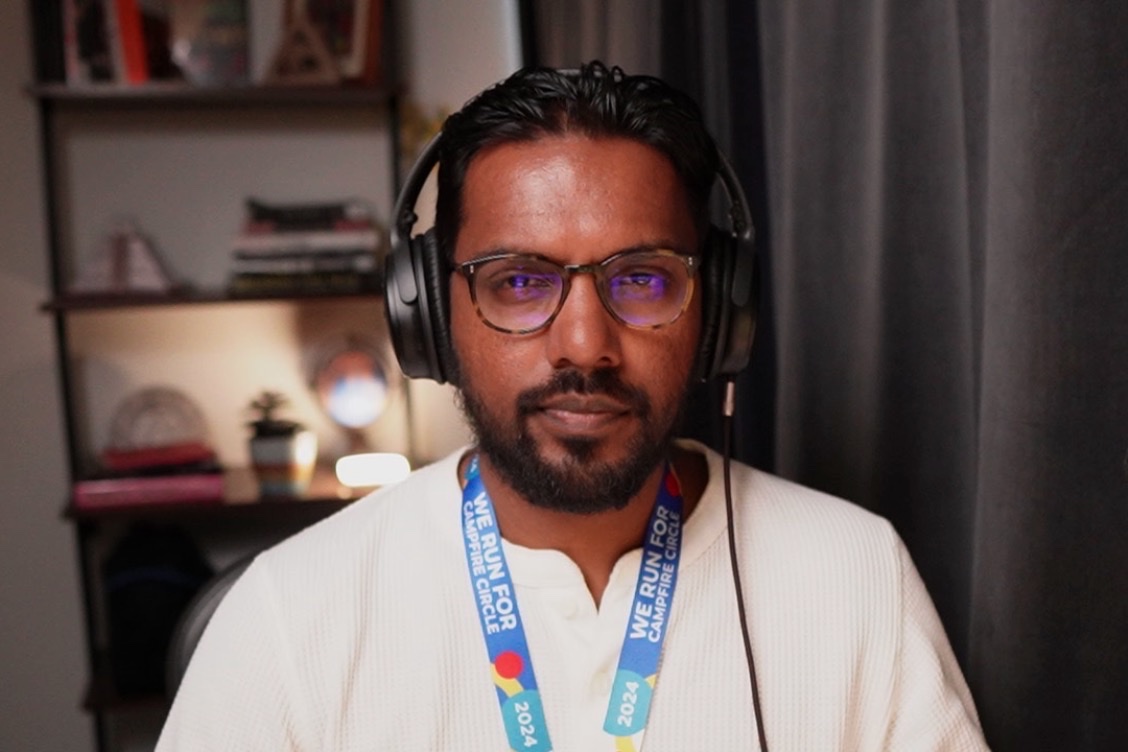
Behind the microphone
Why I created Open Minds
On November 15, 2018, I published my first episode under the name The Strong and Free Podcast.
I loved what long-form conversation made possible. There was time to ask follow-up questions and follow ideas that could lead us down unexpected paths.
At the beginning, I was still figuring out what I wanted the podcast to become. Each interview introduced a new perspective or complicated something I thought I understood. Over time, I realized that the questions left behind by a conversation were often just as valuable as the answers.
The name Open Minds grew out of that experience. It captured the kind of space I wanted to create: somewhere people could explore an issue without feeling that the conclusion had already been selected for them.
I want people from across the political spectrum to feel welcome here. They may not agree with every guest, every question or every conclusion. I hope they will still feel that the conversation was approached honestly and that they came away with something worth considering.
What guides Open Minds
The first answer often tells us what someone believes. The next question helps us understand why.
Every public debate emphasizes certain facts, experiences and consequences. I want to know which ones have been left outside the frame.
Different perspectives deserve to be heard, but they should also be examined. Evidence helps us determine what a claim can support and where uncertainty remains.
Nuance should help us understand a problem more clearly. It should not prevent us from eventually making judgments or decisions.

Christopher Balkaran speaking to an audience
How I approach a conversation
I spend time understanding the history, institutions, evidence and language surrounding an issue. During the conversation, I listen for the places where a term needs to be defined, a claim needs to be tested or an individual experience complicates the broader story.
I want guests to have enough room to explain how they arrived at their position. I also want the audience to hear the difficult follow-up question.
For me, fairness does not mean avoiding scrutiny. It means applying that scrutiny thoughtfully and giving someone a genuine opportunity to answer.
That is also how I approach moderation. A good moderator helps people understand where the real disagreement lies. They keep the discussion grounded, make space for perspectives that might otherwise be overlooked and help an audience follow the ideas without deciding the conclusion for them.
The goal is a more informed conversation, one in which people can disagree while still understanding what they are disagreeing about.
Across the table
Through Open Minds, I have spoken with researchers, public officials, advocates and people whose lives are directly connected to the issues being discussed.
They do not all see the world in the same way. Each conversation has helped me understand something that I could not have understood quite as well on my own.
Where I hope this goes
I want to create more opportunities for live conversations, moderated discussions and public gatherings where people can hear the full argument, consider perspectives outside their usual circles and form their own views.
We are going to continue facing difficult questions. My hope is that Open Minds can make a small contribution to how we face them together.